The STEM Project Bundle includes a variety of hands-on packs designed to engage kids ages 5-12 in exploring science, technology, engineering, and math. Packed with activities for all age levels, it’s perfect for both home learning and classrooms.
These were created to improve science education, helping students to really dive down deep into the content. In this post, you will take a deep dive into models and Science and Engineering Practice 2, developing and using models.
A step-by-step guide helps users construct an impressive plant or animal cell model on a budget, great for science classes or fairs. The text emphasizes the significance of using models in science, explaining how diagrams and 3-D representations foster meaningful learning connections.
In this article, we outline a three-layer approach to designing model templates that support students’ efforts to draw and explain. We start with suggestions for how to phrase the essential questions students are responding to so that the purpose of their modeling is more focused and explicit.
The Role of Models in Science erstanding, doing, and communicating about science. Scientists use models to make predictions and construct explanations for how and why natural henomena (i.e., observable facts and events) happen. For example, weather maps are mo
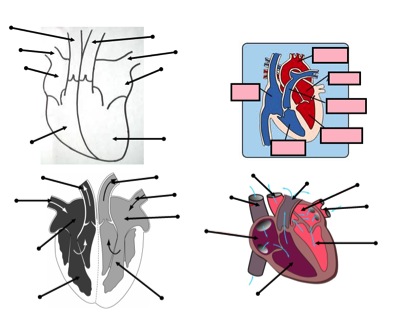
Scientific modeling allows students to visualize something difficult to see or understand without some kind of representation. According to NGSS, scientific models include analogies, diagrams, physical replicas, mathematical representations, and computer simulations, such as ExploreLearning Gizmos.
So much of what we deal with in science cannot be seen and so models are a powerful tool in the science classroom that help us represent, describe, explain and reason about the material world.
Practices shift the focus from science classrooms as an environment where students learn about science ideas to places where students explore, examine and use science ideas to explain how and why phenomena occur.
 So much of what we deal with in science cannot be seen and so models are a powerful tool in the science classroom that help us represent, describe, explain and reason about the material world.